Open Tuesday to Friday, 8:00 AM to 5:00 PM
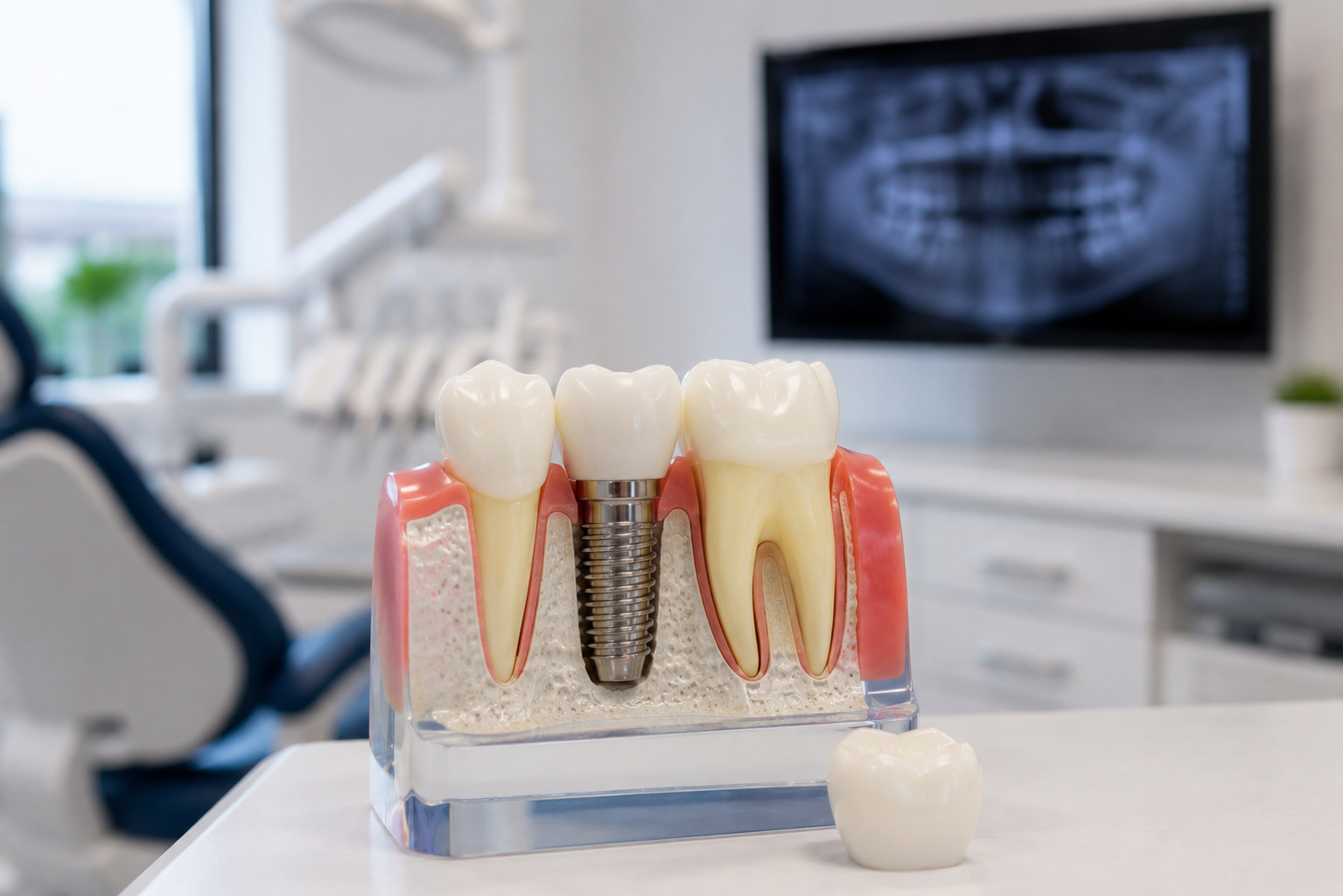
A single tooth implant replaces a missing tooth from root to crown, so it looks, feels, and works like the natural tooth you lost. One missing tooth changes more than how you smile. It affects how you chew, how you speak, and starting almost immediately, the bone in your jaw. Dr. Matthew Collins uses precise techniques and proven implant systems to deliver permanent results that fit right in with your smile.
A single tooth implant has three parts that work together to recreate the strength and appearance of a natural tooth.
A small titanium screw placed in the jawbone. It acts as the new root and fuses with your bone over three to six months.
A small connector that attaches to the top of the implant post and holds the crown in place above the gum line.
A custom porcelain crown shaped and shaded to match your surrounding teeth. This is the visible part of your new tooth. Learn more about our implant-supported crowns.
A dental bridge or partial denture can replace a missing tooth, but only an implant replaces the root too. That difference matters a lot for your long-term oral health.
A custom crown is shaded and shaped to match your other teeth. Most people can't tell which tooth is the implant.
Eat what you want. Bite into an apple, chew a steak, smile in photos. An implant works just like the tooth it replaced.
Without a root, the jaw starts receding right away, and most of the width loss happens in the first three to six months rather than slowly over years. The implant post stimulates the bone the way a natural root does.
Unlike a traditional bridge, an implant doesn't require us to file down healthy neighboring teeth.
With proper care, the implant post can last decades, often a lifetime. The crown typically lasts 10 to 15 years.
Brush and floss like you would a natural tooth. No special routines, no removable parts.
A single tooth implant is a multi-step process spread across several months. Most of that time is healing, not treatment. Here's what to expect.
3D imaging, exam, and a clear treatment plan with cost.
The titanium post is placed under local anesthesia in one visit.
Three to six months for the implant to fuse with your jawbone.
Abutment placed and a digital impression taken for your custom crown.
Your custom porcelain crown is attached, completing your new tooth.
During your implant consultation, Dr. Collins reviews the four factors that determine implant success.
Your gums need to be free of active periodontal disease. If gum disease is present, we treat it first with periodontal therapy before placing an implant.
Implants need enough bone to anchor into, and the jaw starts giving that bone back as soon as a tooth is gone. Because most of the loss happens in the first few months, older gaps more often need a bone graft first. We coordinate that referral, then place the implant once the site is ready.
Most patients are healthy enough for an implant. Uncontrolled diabetes, smoking, and certain medications can affect healing, so we review your full medical history.
Implants last when you take care of them. Daily brushing, daily flossing, and routine dental cleanings keep the implant and the gum tissue around it healthy.
Two Rivers Dental Group replaces single missing teeth for patients from Springfield and the surrounding Lane County communities. Single tooth implants are the most common starting point in our dental implants care, alongside other tooth replacement options. Our office at 1717 Centennial Blvd, Suite #3 is open Tuesday through Friday, 8:00 AM to 5:00 PM. Call 541-287-7874 to schedule a consultation.
Most single tooth implant cases take three to six months, and the majority of that is healing time while the implant fuses with your jawbone, not time in the chair. Placement itself is a single visit, and the final crown appointment is quick.
For most patients, yes. An implant replaces the root, which preserves your jawbone and doesn't require filing down healthy neighboring teeth the way a bridge does. A bridge can be finished faster and costs less up front, so it still makes sense in some cases. Dr. Collins walks through both honestly at your consultation.
Placement is done under local anesthetic, and most patients say it was easier than they expected, often comparing it to getting a filling. Soreness for a few days afterward is normal and typically managed with over-the-counter pain relief.
Sooner is better, and the reason is bone. Once a root is gone, the jawbone around the gap starts receding right away, and research shows most of that width loss happens in the first three to six months rather than gradually over years. Coming in early gives Dr. Collins the most options and the best chance of placing your single tooth implant without needing a bone graft first.
Usually, yes. Bone recedes fastest in the first few months after a tooth is gone, so with an older gap most of that change has already happened and settled. It often means rebuilding the site with a bone graft before the implant goes in. We coordinate grafting with trusted local oral surgeons, then place the single tooth implant here at our Springfield office once the site is ready.
Schedule a consultation with Dr. Collins at our Springfield office. Honest answers, clear costs, and a smile that lasts.
541-287-7874