Open Tuesday to Friday, 8:00 AM to 5:00 PM
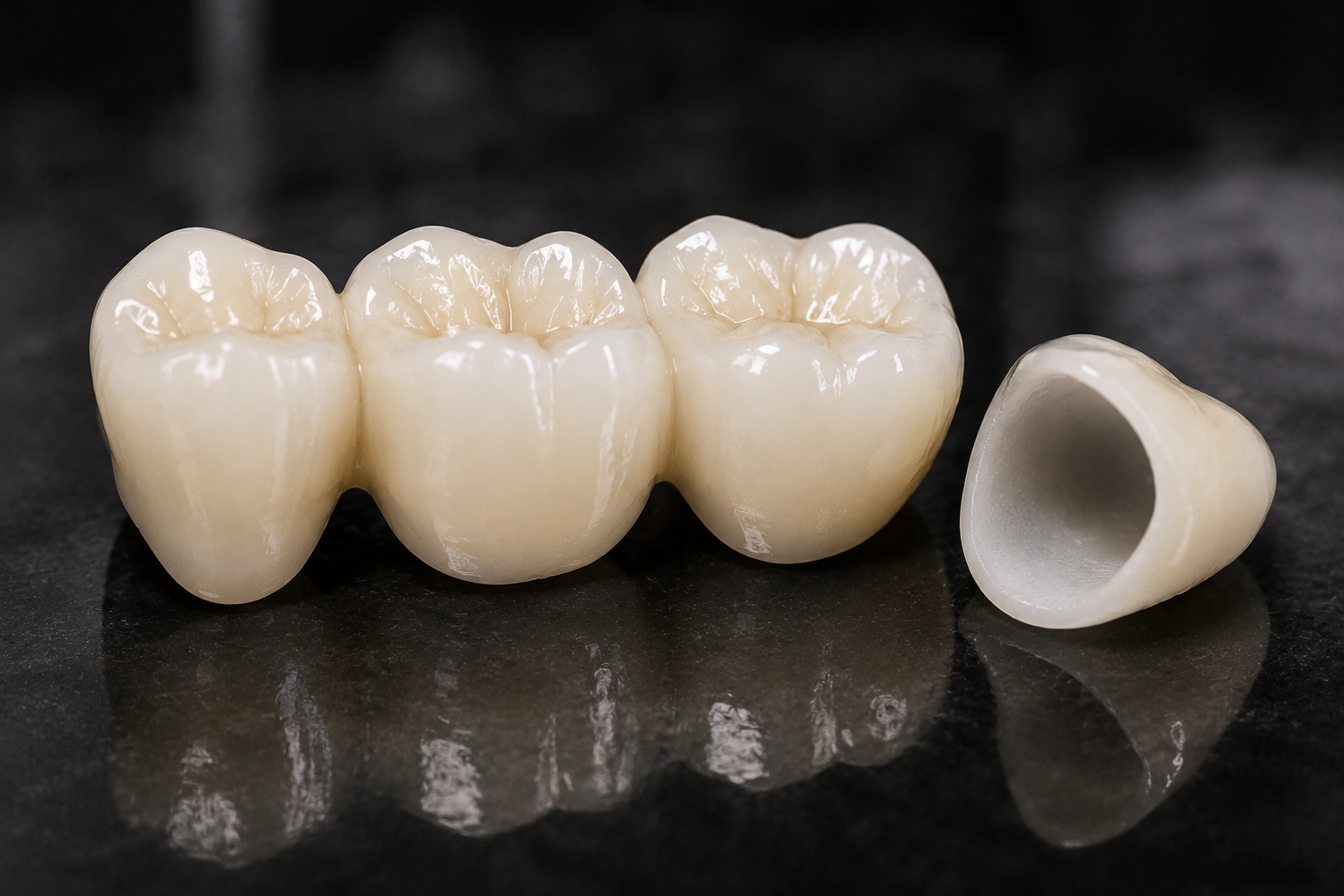
A dental crown is a custom cap that covers the entire visible part of a tooth. When a tooth is too damaged for a filling but still has a healthy root, a crown rebuilds the strength and shape of the tooth and protects what's underneath. Dr. Matthew Collins designs every crown to match your bite, your color, and your smile, using porcelain or zirconia depending on what works best for the tooth. Most crown cases are completed across two visits.
Every crown is made for your specific tooth, shaped to your bite and matched to your natural color so it stays invisible.
Modern porcelain and zirconia crowns are designed for decades of use. Daily care and routine dental cleanings extend that even further.
Most cases finish in two appointments, two to three weeks apart. You leave the first visit with a temporary crown that protects the tooth.
Crowns are the right answer when a tooth is damaged enough that a filling won't hold up but the root underneath is still healthy. Here are the most common scenarios we see at our Springfield office.
An old filling that's cracked, leaked, or simply too large to repair again. A crown replaces it and rebuilds the tooth's full strength.
A crack from biting hard food, grinding, or trauma. A crown holds the tooth together and prevents the crack from spreading deeper.
Root canals weaken the tooth structure. A crown caps the treated tooth, protects what's left, and restores normal chewing function.
Years of grinding, acid wear, or aging can leave a tooth too short or too thin to function. A crown rebuilds it to its original size.
Different teeth call for different materials. Dr. Collins recommends the best fit based on the tooth location, your bite, and how the crown will look in your smile.
All-ceramic crowns that mimic the translucency of natural enamel. The most lifelike option we offer.
Ultra-durable ceramic crowns milled from a single block of zirconium oxide. The strongest material we use.
A zirconia core with porcelain layered over the visible surface. Strength underneath, a more lifelike finish on the side people see.
Most crown cases are completed across two appointments scheduled two to three weeks apart. Here's exactly what happens at each visit.
Local anesthesia keeps the area completely comfortable.
Dr. Collins gently shapes the tooth to make room for the crown.
Digital scans capture the exact shape needed for your custom crown.
We match the crown shade to your natural teeth before sending to the lab.
A temporary crown protects the tooth while your final crown is made.
The temporary crown is gently removed and the tooth is cleaned.
We check fit, color, and bite before anything is permanent.
The crown is permanently bonded to the tooth with strong dental cement.
The final crown is polished and your bite is fine-tuned.
You leave with full chewing function and an invisible repair.
Your temporary crown protects the tooth while the lab crafts your final crown. Avoid sticky or hard foods on that side. Most patients forget the temporary is even there.
A crown isn't always the answer. Sometimes a simpler option is enough, and sometimes a more involved treatment is needed. Here's how Dr. Collins decides.
The damage covers more than half the tooth, the tooth is cracked, or there's not enough healthy structure left to hold a filling securely.
The damage is small and contained, the tooth is structurally sound, and a composite dental filling can fully repair the area.
The tooth is structurally damaged or weakened. A crown rebuilds the entire tooth rather than only the front-facing surface.
The tooth is healthy and the goal is purely cosmetic. Dental veneers only cover the front of the tooth.
The root and surrounding bone are still healthy. A crown saves the natural tooth, which is almost always the preferred path.
The tooth is beyond saving. We then plan a replacement using a dental implant or a dental bridge.
Two Rivers Dental Group makes custom crowns for patients from Springfield and the surrounding Lane County communities. Crowns are a cornerstone of our restorative dentistry care, and we also craft implant-supported crowns when the tooth is replaced with an implant. Our office at 1717 Centennial Blvd, Suite #3 is open Tuesday through Friday, 8:00 AM to 5:00 PM. Call 541-287-7874 to schedule a crown consultation.
No. The tooth is fully numbed with local anesthesia before any reshaping, so the prep visit is comfortable. Some patients feel mild sensitivity for a few days afterward, which fades on its own. The second visit is usually easier than a routine cleaning.
Porcelain and layered zirconia crowns typically last 10 to 15 years, and solid zirconia crowns 15 to 20. Daily brushing and flossing, routine cleanings, and a night guard if you grind all stretch those numbers further. Many well-cared-for crowns outlive their estimates.
Cost depends on the material and the tooth involved. Because crowns are restorative rather than purely cosmetic, most dental plans cover a portion. We verify your benefits and give you a written estimate at our Springfield office before any work starts.
No. Crown materials don't respond to bleaching, so the shade you choose is the shade you keep. If you're planning to whiten your teeth, do that first and Dr. Collins will match the new crown to your brighter shade. Learn more on our teeth whitening page.
Schedule a crown consultation with Dr. Collins at our Springfield office. Honest answers, clear costs, and lasting results.
541-287-7874