Open Tuesday to Friday, 8:00 AM to 5:00 PM
A dental bridge replaces one or more missing teeth by anchoring a custom replacement tooth between healthy teeth on either side. The result is a fixed, natural-looking restoration that fills the gap, restores your bite, and prevents the surrounding teeth from shifting. Dr. Matthew Collins designs every bridge to fit your mouth exactly and match the rest of your smile, so the replacement tooth blends right in.
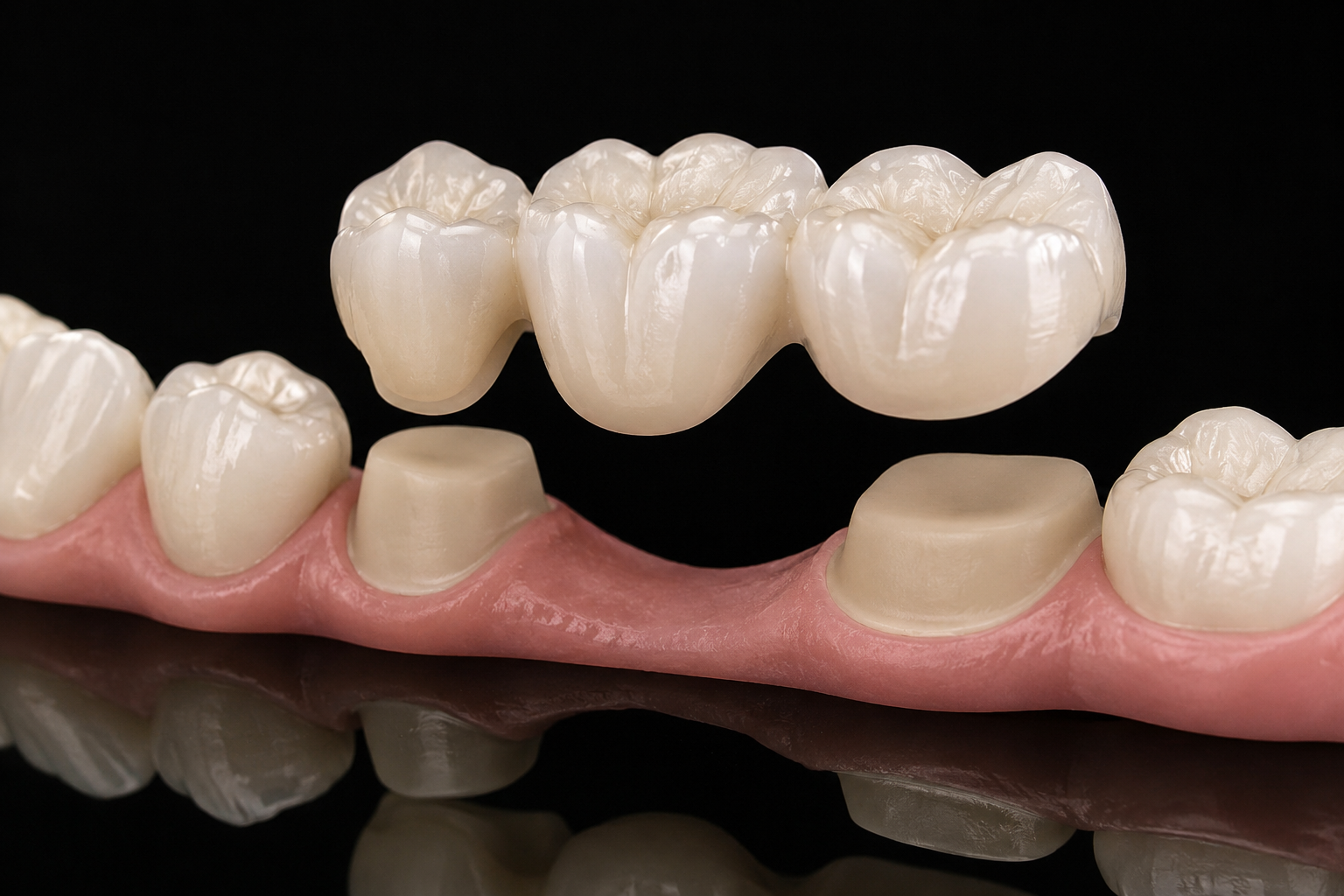
A traditional bridge is built from three connected pieces working together to fill the gap and stay anchored in place.
The healthy tooth on one side of the gap. It's reshaped slightly to support a dental crown that holds the bridge in place.
The custom replacement tooth that fills the gap. Designed to match your other teeth in shape and color so it stays invisible.
The healthy tooth on the other side of the gap. Together with the left abutment, it carries the chewing load for the replacement tooth.
Different gaps call for different bridge designs. Dr. Collins recommends the best fit based on your specific situation, the location of the gap, and the health of your surrounding teeth. When several teeth in a row are missing, a partial denture is sometimes the better path.
The classic three-unit design with a replacement tooth anchored by crowns on both neighboring teeth. The most reliable and widely used bridge type.
Anchored to a single neighboring tooth instead of two. Used in specific situations where there's only one healthy tooth adjacent to the gap.
Anchored to dental implants instead of natural teeth. Ideal when multiple teeth are missing or when the neighboring teeth shouldn't be reshaped.
A traditional bridge takes about three to four weeks from start to finish. After your consultation, the work itself happens across two treatment visits. Here's what to expect at each stage.
Dr. Collins examines the gap, takes X-rays, and confirms the best bridge type. You see the plan and approve before any work begins.
Anchor teeth are reshaped, digital impressions are taken, and a temporary bridge is placed to protect the area while your final bridge is crafted.
Your custom bridge is built in a dental lab using your digital impressions. The replacement tooth is shaped and color-matched to your other teeth.
The temporary is removed, the final bridge is checked for fit and color, then permanently bonded in place. You leave with a fully restored smile.
A missing tooth causes more than a cosmetic problem. The longer the gap stays, the more it affects the rest of your mouth. Here's why we recommend replacing missing teeth sooner rather than later.
Without a tooth filling the space, the teeth on either side gradually tilt or drift into the gap. This throws off your bite and creates new alignment issues.
The tooth above or below the gap can grow longer over time without something to bite against. This makes it harder to clean and more likely to fail.
The jawbone where the root used to be begins shrinking as soon as the tooth is gone, and most of that width loss happens in the first three to six months rather than slowly over years. A bridge fills the gap above the gum but doesn't replace the root, so only a dental implant stops that process.
You start avoiding certain foods or chewing on one side. That extra wear shows up as cracked teeth, jaw pain, or premature wear on the side you favor.
Two Rivers Dental Group crafts dental bridges for patients from Springfield and the surrounding Lane County communities. Bridges are one of the main tooth replacement paths in our restorative dentistry care, alongside implants and dentures. Our office at 1717 Centennial Blvd, Suite #3 is open Tuesday through Friday, 8:00 AM to 5:00 PM. Call 541-287-7874 to schedule a bridge consultation.
No. The anchor teeth are numbed with local anesthesia during the prep visit, so the work itself is comfortable. Mild sensitivity for a few days afterward is normal, and most patients adjust to the feel of the bridge within a week or two.
Two treatment visits after your consultation. The first reshapes the anchor teeth, takes impressions, and places a temporary bridge. The second seats the final bridge two to three weeks later, once the lab has crafted it. Counting the consultation, most traditional bridges run three to four weeks start to finish.
A properly cared-for traditional bridge lasts 10 to 15 years, and implant-supported bridges often last 15 to 20 or more. Daily cleaning under the replacement tooth and routine checkups are what make the difference between the low and high end of those ranges.
A bridge is faster and usually costs less upfront, while a single tooth implant preserves jawbone and doesn't require reshaping the neighboring teeth. Which one wins depends on your anatomy, timeline, and budget. Our tooth replacement guide compares the options side by side, and Dr. Collins walks through them at your consultation.
Food and plaque can collect under the replacement tooth, so daily cleaning there matters. Floss threaders, super floss, or a water flosser all work well, and we'll show you the technique at placement. Routine dental cleanings let us check the bridge and the anchor teeth twice a year.
Schedule a bridge consultation with Dr. Collins at our Springfield office. Honest answers, clear costs, and lasting results.
541-287-7874