Open Tuesday to Friday, 8:00 AM to 5:00 PM
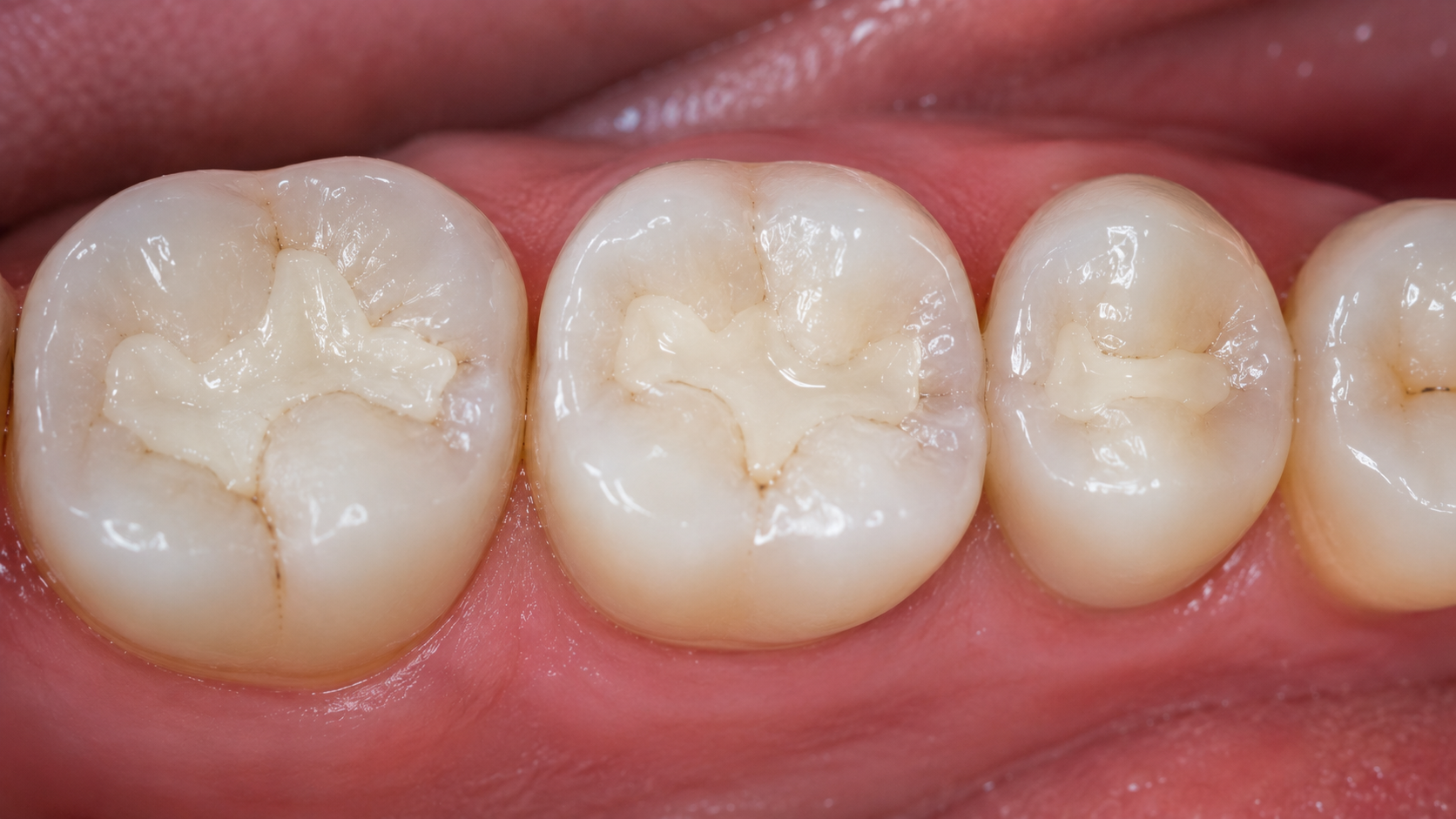
A dental filling is the most common way to repair a tooth. When decay creates a cavity or a small crack starts to spread, a filling stops the damage and restores the tooth's strength. Dr. Matthew Collins uses tooth-colored composite that bonds directly to your tooth and matches your natural shade, so your fillings stay invisible. Most cases are completely finished in a single visit and most patients walk out the same day they walked in.
Cavities don't always hurt right away, which is why routine dental exams catch most of them early. Once symptoms appear, here's what most patients describe.
A sharp twinge when eating ice cream, drinking cold water, or biting into something sweet.
A small dark or stained area on a tooth surface that wasn't there before.
A noticeable pit, divot, or rough patch your tongue keeps finding on a tooth.
Discomfort when biting down on a specific side, especially with hard or sticky food.
A dull ache that comes and goes or sharpens when you're tired or chewing on that side. Persistent pain may call for toothache treatment.
Floss or food keeps getting stuck in the same spot between two teeth.
Notice any of these? Don't wait. Small cavities are easy and affordable to fix. Untreated cavities grow and may eventually need a dental crown or root canal.
Call 541-287-7874Most dental practices have moved away from traditional silver amalgam fillings. We use tooth-colored composite as our default. Here's the honest comparison, including where amalgam still wins.
A bonded resin material that matches your natural tooth color and chemically attaches to the tooth structure. Modern composites have come a long way in strength and durability.
The classic silver-colored fillings used for over a century. Durable and proven, but they come with tradeoffs our patients no longer have to accept.
Amalgam is the tougher material and often runs 10 to 15 years against composite's 7 to 10. What you get for that is a filling nobody can see, a bond to the tooth itself, and less healthy tooth removed to place it. For most patients that trade is worth it, and Dr. Collins will say so if your case is one where it isn't.
Most filling appointments take 30 to 60 minutes depending on the size and location of the cavity. Here's exactly what happens during your visit.
Local anesthesia is applied to the area around the tooth. We use a topical numbing gel first so the injection itself stays comfortable.
Dr. Collins gently removes the decayed portion of the tooth. Only the damaged tissue is taken out. Healthy tooth structure is preserved.
The cavity is cleaned and a mild conditioner is applied to help the composite bond securely to the tooth.
Tooth-colored composite is placed in thin layers and hardened with a curing light. Dr. Collins shapes the material to match the original tooth contour.
The filling is polished to mimic natural enamel. Dr. Collins checks your bite to make sure it feels right when you chew. You leave the same day.
If you have older silver fillings or composite fillings from years ago, they don't last forever. Most fillings need to be replaced at some point, and catching them before they fail saves you a much bigger restoration down the road.
Dr. Collins reviews your existing fillings at every routine exam. We only recommend replacement when there's a real reason. No upselling for the sake of it.
Two Rivers Dental Group places dental fillings for patients from Springfield and the surrounding Lane County communities. Fillings are the most common treatment in our restorative dentistry care. Our office at 1717 Centennial Blvd, Suite #3 is open Tuesday through Friday, 8:00 AM to 5:00 PM. Call 541-287-7874 to schedule a same-day filling.
No. We apply a topical numbing gel before the local anesthesia, so even the injection stays comfortable. Most patients feel pressure but no pain during the visit. Mild soreness or sensitivity for a day or two afterward is normal and fades on its own.
Modern composite fillings typically last 7 to 10 years, and many go well beyond that with good habits. Daily brushing and flossing, routine dental cleanings, and consistent preventive care protect both the filling and the tooth around it.
Usually not, and that's the honest tradeoff. Amalgam is the more durable material and often runs 10 to 15 years, while composite typically runs 7 to 10. What composite gives you instead is a filling nobody can see, a bond to the tooth itself, and less healthy tooth removed to place it. For most patients that trade is worth it, and Dr. Collins will tell you if your case is one where it isn't.
Yes. Composite fillings are fully hardened by the curing light before you leave, so the filling itself is ready immediately. Just wait until the numbness wears off, usually an hour or two, so you don't accidentally bite your cheek or tongue.
Only when there's a real reason. Intact amalgam fillings that are sealed and functioning don't need to come out. We recommend replacement when a filling is cracked, leaking, worn, or when you want a tooth-colored match for cosmetic reasons. Dr. Collins checks your existing dental fillings at every routine exam.
Schedule a single-visit filling appointment with Dr. Collins at our Springfield office. Most cases finish in 30 to 60 minutes.
541-287-7874